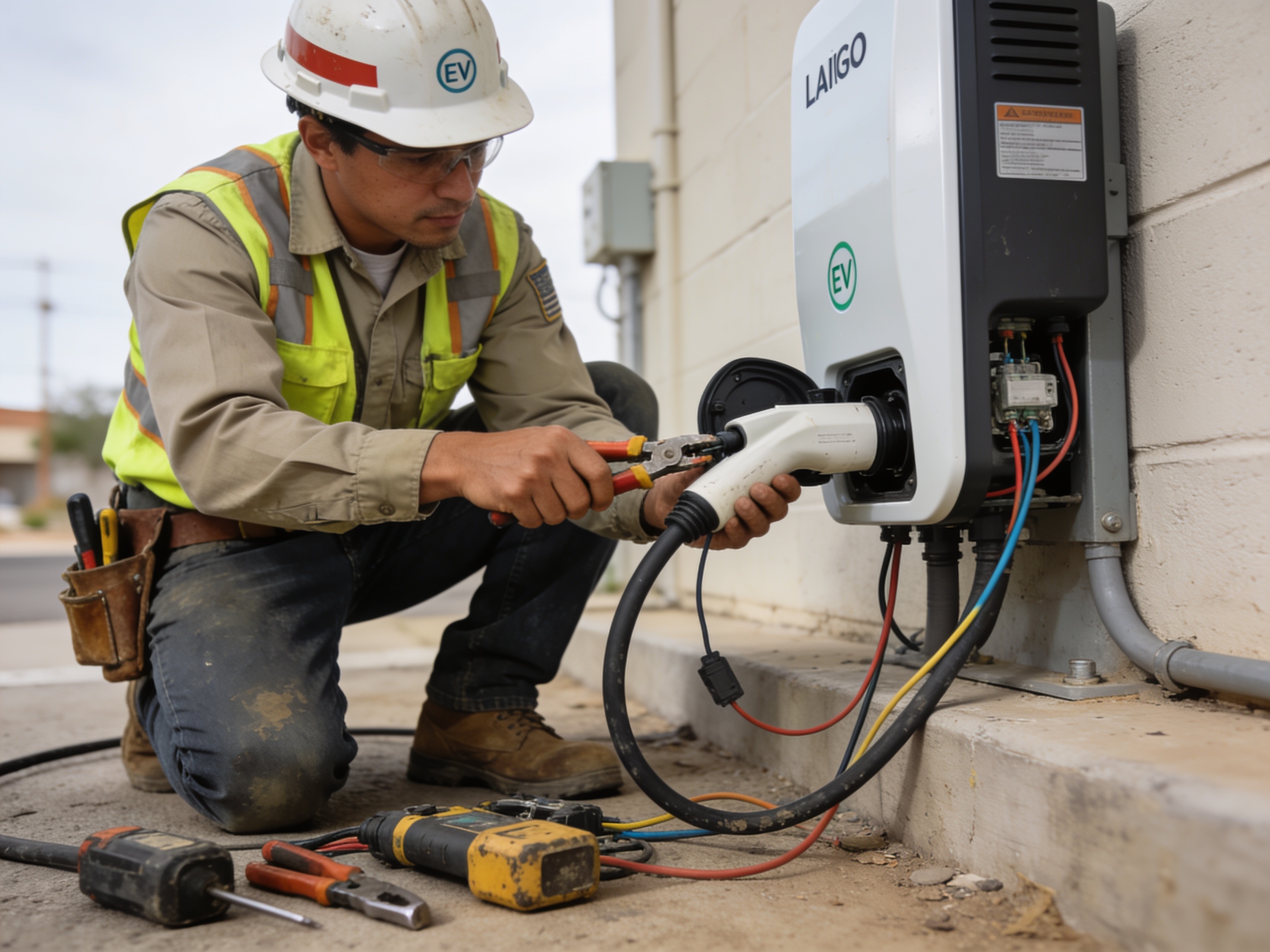
Laredo’s hot semi-arid climate puts extra stress on EV charger components, especially in neighborhoods like Hillside and Los Presidentes where many homes built before 1990 still rely on 100-amp panels. High summer temperatures can cause connectors and circuit boards to overheat, leading to intermittent faults that only appear after the unit has been running for hours. Technicians here routinely check for proper ventilation and derate amperage when ambient conditions push past 100 degrees.
Older housing stock in Downtown and around San Agustin Plaza often has aluminum branch wiring or undersized neutrals that were never meant for continuous EV loads. Adding a Level 2 charger without first verifying conductor size and panel capacity risks nuisance trips or melted insulation. Local code enforcement in Webb County now requires a load calculation on every new installation, and many jobs in Del Mar end up needing a panel upgrade before the charger can be energized.
Soil conditions and occasional flooding near the Rio Grande also affect outdoor charger installations. Ground rods can shift in the clay-heavy soil, raising resistance and triggering GFCI trips. Installers working near the Republic of the Rio Grande Museum or Laredo Center for the Arts frequently run conduit in protective sleeves and use stainless hardware to resist corrosion from irrigation overspray and dust.
Technician insight
In Laredo, the thing that catches most people out with EV Charger Repair and Installation is the combination of 1960s-1980s aluminum wiring in Hillside and Los Presidentes homes plus our sustained 100-plus-degree summers. The heat accelerates oxidation at terminations, so a charger that worked fine in spring can start tripping GFCIs by July unless the connections were properly torqued and anti-oxidant compound was used.
Overheated Charger in Del Mar
Homeowner in Del Mar reported the charger shutting down midday. Inspection showed melted insulation on the branch wiring feeding a 60-amp breaker in a 1978 panel. We replaced the run with properly sized copper, added a ventilation shroud, and confirmed stable operation under full load during afternoon heat.
EV Charger Repair and Installation Services We Offer
✓Level 2 Charger Installation
Full installation of 240-volt Level 2 units sized for Laredo homes, including permit coordination and final inspection in Webb County.
✓EV Charger Fault Diagnosis
On-site testing of error codes, GFCI trips and communication failures common after repeated exposure to Laredo’s extreme summer heat.
✓Wiring Upgrade for EV Chargers
Replacement of undersized or aluminum wiring in pre-1990 homes in Downtown and Hillside to safely support continuous EV loads.
✓Outdoor Charger Weatherproofing
Sealing and conduit upgrades to protect chargers from dust, irrigation water and high temperatures in neighborhoods like Del Mar.
✓Panel Load Calculation and Upgrade
Detailed load study followed by panel upgrades when existing service in Los Presidentes or surrounding areas cannot support added EV demand.
How it works
- 1
Site Assessment
Technician inspects the panel, wiring type and available circuits in the specific Laredo neighborhood, noting any aluminum wiring or prior modifications.
- 2
Load Calculation
Perform a formal load calculation per Webb County requirements to confirm whether the existing service can handle the charger without upgrades.
- 3
Installation Or Repair
Run new conduit, install the charger or replace faulty components, using hardware rated for Laredo’s heat and occasional moisture exposure.
- 4
Testing And Handover
Verify GFCI function, communication with the vehicle and proper ventilation, then review operation with the homeowner before leaving.
Pricing
Upfront written quotes provided during business hours: Mon–Fri 8am–6pm, Sat 9am–2pm.